
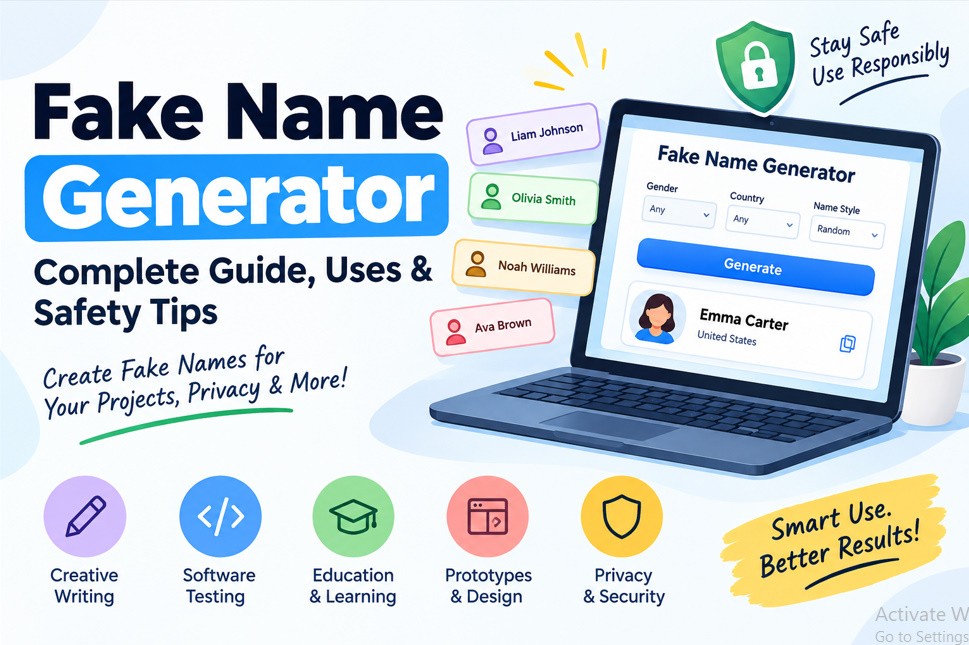
A fake name generator can create fictional names within seconds, making it useful for creative writing, software testing, demonstrations, privacy-conscious placeholders, and brainstorming. Instead of manually combining first names and surnames, you can enter a few preferences and receive suitable random results instantly.
Learning how to use a fake name generator is simple, even if you have never used one before. This guide explains the complete process, from selecting preferences and generating a name to evaluating results and using fictional information responsibly.
What Is a Fake Name Generator?
A fake name generator is an online tool that automatically creates fictional names using a collection of first names, surnames, and randomization rules. Depending on the tool, you may be able to choose gender, country, language, region, or naming style before generating your result.
The purpose is usually to provide synthetic names rather than information belonging to a specific individual. Writers can use them for fictional characters, while developers can use them as sample records. Students, designers, testers, and content creators can also use generated names for legitimate projects.
- Creates fictional names
- Generates random combinations
- Saves brainstorming time
- Supports creative projects
- Helps create test data
- Offers different preferences
- Produces instant results
- Works for beginners
Choose the Right Name Preferences
The first step is deciding what type of name you need. Many generators provide options for country, nationality, gender, language, or naming style. Choosing relevant preferences helps produce results that better match your intended character, testing environment, story, or demonstration.
For example, a historical fiction project may require names appropriate to a particular culture or period. A software developer might simply need diverse sample names. Before generating anything, identify the context so that your selected filters produce more useful and realistic fictional results.
- Select a country
- Choose a region
- Pick gender
- Select language
- Consider naming style
- Define your purpose
- Review available filters
- Keep requirements simple
Generate Your First Fake Name
After selecting your preferences, look for the generator’s main action button, commonly labeled Generate, Create Name, or something similar. Click it, and the tool will randomly select a suitable first name and surname from its available data.
Do not worry if the first result is not perfect. Random generation is designed to provide possibilities rather than guarantee the ideal answer immediately. Generate several options and compare them based on pronunciation, appearance, cultural relevance, character personality, or project requirements.
- Open the generator
- Set preferences
- Click generate
- Wait for the result
- Read the full name
- Check spelling
- Generate another option
- Save useful results
Customize and Regenerate Results
Sometimes the first generated name does not match your expectations. Instead of accepting an unsuitable result, change your preferences or generate another name. Repeated generation is one of the main advantages of a random name generator because it gives you many alternatives quickly.
When customizing results, avoid making the process unnecessarily complicated. Choose only the characteristics that genuinely matter. For example, if you need a fictional American character, selecting a relevant region may be useful, while unnecessary filters could limit your options.
- Change the gender
- Change the country
- Adjust the region
- Try another naming style
- Generate multiple options
- Compare results
- Remove unnecessary filters
- Select the best match
How to Choose a Realistic Fictional Name
A generated name should fit the context where you intend to use it. Consider whether the first name and surname sound natural together. For creative writing, think about the character’s personality, background, age, location, and role before making your final choice.
For testing purposes, realism can also matter. Different name lengths and structures can help developers determine whether a website or application handles various inputs correctly. However, a realistic-looking name remains fictional data and should not be represented as a verified identity.
- Check pronunciation
- Review spelling
- Consider cultural context
- Match the character
- Check name length
- Compare alternatives
- Avoid confusing combinations
- Keep fictional information fictional
Using Fake Names for Creative Projects
One of the easiest ways to use a fake name generator is for creative writing. Authors can generate names for protagonists, supporting characters, fictional families, villains, businesses, cities, or background personalities. The tool can help overcome writer’s block and quickly provide new ideas.
Game developers, screenwriters, bloggers, role-playing players, and content creators can use the same approach. Generate several possibilities, shortlist the strongest options, and then modify them if necessary. The generator should support your creative process rather than replace your own judgment.
- Name story characters
- Create fictional personas
- Develop game characters
- Name imaginary businesses
- Build fictional families
- Generate role-playing names
- Overcome writer’s block
- Brainstorm character ideas
Using Fake Names for Testing and Examples
Developers can use fictional names to test websites, applications, forms, databases, dashboards, and customer interfaces. A collection of synthetic names can help determine whether a system correctly displays short names, long names, unusual combinations, search results, sorting options, and user profiles.
Teachers, designers, marketers, and students can also use fake names when creating examples. A presentation or prototype often looks more realistic when it contains sample user information. Always keep such information clearly fictional and avoid inserting generated identities into systems where genuine identification is required.
- Test registration forms
- Populate databases
- Check user profiles
- Test search features
- Create UI examples
- Build prototypes
- Demonstrate applications
- Create sample records
Use Generated Names Safely and Responsibly
Using a fake name generator responsibly means understanding the difference between fictional data and deceptive identity information. A generated name can be useful for testing or creative work, but it should not be used to impersonate another person, commit fraud, mislead