
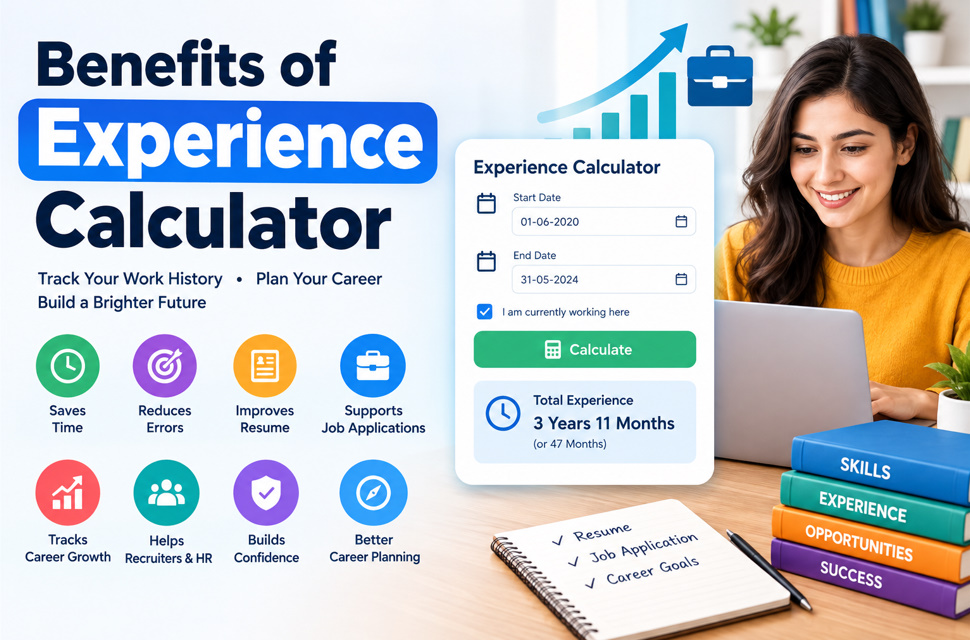
An Experience Calculator is a practical online tool designed to calculate the total duration of professional or personal experience. Instead of manually counting years, months, and days between employment dates, users can enter their starting and ending dates to obtain a clear experience summary. This makes experience tracking faster and more convenient.
Whether you are preparing a resume, applying for a job, checking eligibility requirements, or maintaining employment records, an experience calculator can simplify date calculations. It helps reduce common counting mistakes while providing a quick overview of accumulated work experience.
Provides Accurate Experience Calculation
One of the primary benefits of an experience calculator is accuracy. Manually calculating the difference between multiple joining and leaving dates can become confusing, particularly when months have different numbers of days. A digital calculator processes the dates automatically and provides a consistent result in years, months, and days.
Accurate experience information is useful when completing job applications, professional profiles, resumes, and employment forms. By using an experience calculator, users can avoid accidentally overstating or understating their work history. This makes the calculated experience easier to verify and present professionally.
- Calculates years of experience
- Counts months and days
- Reduces manual errors
- Processes dates quickly
- Handles different month lengths
- Simplifies date differences
- Improves record accuracy
- Provides consistent results
Saves Time and Effort
Calculating employment duration manually can take several minutes, especially when someone has worked for multiple organizations. An experience calculator automates this process. Users generally need to enter the relevant dates, and the tool performs the calculations without requiring complicated formulas or calendar counting.
Time savings become particularly valuable for professionals updating their resumes or completing several applications. Instead of repeatedly calculating employment periods, users can obtain the information within moments. This convenience makes an experience calculator a useful productivity tool for students, employees, freelancers, and job seekers.
- Quick date calculation
- Less manual counting
- Easy to operate
- Saves valuable time
- Useful for multiple jobs
- Reduces repetitive work
- Fast experience tracking
- Improves productivity
Helps Create an Accurate Resume
A resume should present professional experience clearly and accurately. An experience calculator can help users determine how long they worked in a particular position or organization. This information can then be used to create more precise employment timelines and professional experience sections.
Accurate career duration can also make a resume easier for recruiters to understand. Instead of estimating employment periods, applicants can use calculated dates when describing their work history. This supports better resume organization and helps maintain consistency between application forms, professional profiles, and employment records.
- Supports resume preparation
- Clarifies employment duration
- Organizes career history
- Improves date accuracy
- Helps avoid estimates
- Supports professional formatting
- Simplifies work history
- Strengthens career documentation
Makes Career Planning Easier
Career planning often requires understanding how much experience has been gained in a particular field. An experience calculator provides a simple way to measure professional tenure and review career progression. Users can compare experience periods across different roles and identify how their professional journey has developed.
Knowing your accumulated experience can also help when setting career goals. For example, someone may want to determine whether they have enough experience for a particular role or professional opportunity. Accurate experience tracking provides useful information for making more informed career decisions.
- Tracks career progression
- Measures professional tenure
- Supports career goals
- Reviews employment history
- Helps assess experience
- Organizes career milestones
- Supports job planning
- Improves career awareness
Simplifies Multiple Employment Records
People who have worked at several companies may find it difficult to calculate their total experience manually. Each position can have different starting and ending dates, creating a complicated timeline. An experience calculator can simplify individual date calculations and help users organize their employment periods.
When reviewing multiple jobs, keeping accurate records is important. Users can calculate each employment duration and then use the results to understand their overall professional experience. This is especially helpful for individuals with diverse careers, contract positions, internships, freelance projects, or overlapping professional activities.
- Handles multiple jobs
- Tracks separate positions
- Organizes employment dates
- Supports contract work
- Records internships
- Helps review career gaps
- Simplifies work timelines
- Improves record management
Reduces Common Calculation Mistakes
Date calculations can involve several small details, including leap years, different month lengths, and incomplete years. These factors can make manual calculations surprisingly difficult. An experience calculator handles the date difference automatically, reducing the possibility of simple arithmetic or calendar-related mistakes.
Reliable calculations are especially useful when experience requirements are important. Some job advertisements specify minimum professional experience, while organizations may request exact employment durations. Having a calculated figure allows users to work from a consistent reference rather than relying on memory or rough estimates.
- Reduces arithmetic errors
- Handles calendar differences
- Accounts for date ranges
- Minimizes incorrect estimates
- Supports accurate applications
- Improves confidence
- Simplifies complex calculations
- Produces reliable results
Supports Job Applications and Eligibility Checks
Many job applications ask candidates to provide their years of professional experience. An experience calculator can help applicants determine the appropriate figure before submitting an application. This is particularly useful when a candidate has several employment periods that need to be reviewed.
The tool can also assist with preliminary eligibility checks. If a vacancy requires a certain amount of experience, users can calculate their employment duration and compare it with the stated requirement. While official organizations may use their own verification methods, an experience calculator provides a helpful personal reference.
- Helps complete applications
- Checks experience duration
- Supports eligibility reviews
- Clarifies professional tenure
- Reduces guesswork
- Improves application accuracy
- Helps compare requirements
- Supports job preparation
Offers a Simple and Beginner-Friendly Solution
Another important benefit of an experience calculator is ease of use. Most users do not need advanced mathematical or technical knowledge. By entering a start date and an end date, beginners can quickly understand the duration of an employment period.
This simplicity makes the tool accessible to a wide range of users. Students can calculate internship experience, professionals can track employment history, and job seekers can prepare career information. With a straightforward interface and automatic calculation, the experience calculator turns a potentially confusing task into a simple process.
- Beginner-friendly interface
- No advanced skills needed
- Easy date entry
- Simple calculation process
- Clear experience results
- Accessible to professionals
- Useful for students
- Convenient online tool
How to Use Experience Calculator
Using an experience calculator is generally straightforward. Start by entering the experience start date, such as your employment joining date. Then enter the relevant end date, or use the current date if you are still working in that position. The calculator processes the date range and displays the corresponding experience duration.
For multiple employment periods, calculate each job separately when appropriate and maintain a clear record of the results. Check that the dates are entered correctly before relying on the result. This simple process makes it easier to track work experience, employment tenure, and career history.
- Enter the starting date
- Enter the ending date
- Check date accuracy
- Calculate the duration
- Review years shown
- Review months shown
- Review days shown
- Record the result
Key Advantages of an Experience Calculator
The overall value of an experience calculator comes from its combination of speed, accuracy, convenience, and accessibility. It replaces complicated manual date calculations with an automated process that can be completed quickly. This makes it useful for everyday career management as well as more formal employment documentation.
From resume preparation to job applications and career planning, accurate experience information can make professional tasks easier. Although users should always follow an employer’s or organization’s official calculation rules when applicable, an experience calculator remains a convenient way to understand and organize personal experience records.
- Accurate experience tracking
- Faster date calculations
- Easier resume preparation
- Better career organization
- Simple employment tracking
- Fewer calculation mistakes
- Convenient experience records
- Useful career planning support