
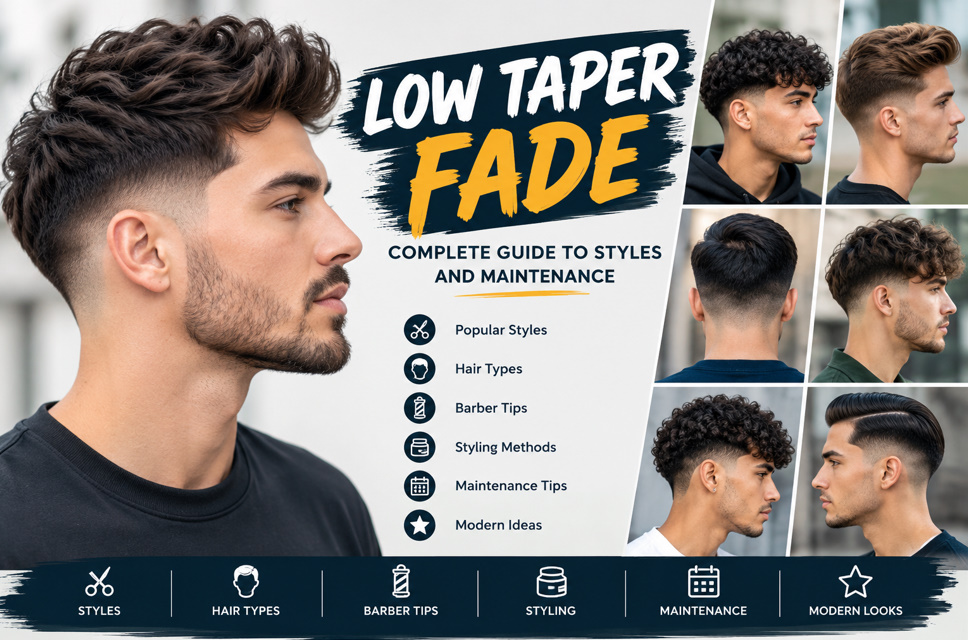
What Is a Low Taper Fade?
A low taper fade is a modern haircut that gradually shortens the hair around the sideburns, ears, and neckline. Unlike a high fade, the transition remains close to the lower edges of the head. This creates a subtle, clean appearance while preserving more length and fullness around the sides.
The haircut combines a traditional taper with a smooth fade effect. The top can remain short, medium, curly, wavy, or textured, allowing the style to work with many different hair preferences. Its understated finish makes the low taper fade suitable for casual, professional, and everyday settings.
- Subtle taper
- Low fade area
- Clean neckline
- Neat sideburns
- Smooth transition
- Fuller sides
- Flexible top
- Modern appearance
Low Taper Fade vs. Other Fade Haircuts
The main difference between a low taper fade and other fade styles is where the gradual shortening begins. A low taper keeps the transition near the ears, sideburns, and neckline. A mid fade begins higher, while a high fade extends significantly farther toward the temples and upper sides.
A taper also differs from a skin fade because it does not necessarily reduce the hair all the way down to bare skin. The result can therefore look softer and more natural. Understanding these differences helps beginners communicate their preferred haircut clearly to a barber.
- Low transition
- Mid transition
- High transition
- Skin fade
- Tapered edges
- Natural finish
- Stronger contrast
- Different guard lengths
Popular Low Taper Fade Styles
There are many ways to customize a low taper fade. A textured top adds movement, while a side part creates a more traditional appearance. Curly hair can be left longer to highlight natural texture, and a short crop provides a simple, low-maintenance option for everyday grooming.
The low taper can also complement waves, fringe hairstyles, longer tops, and neatly styled hair. Because the taper primarily shapes the lower portions of the haircut, you can change the styling of the top without completely changing the underlying haircut.
- Textured low taper
- Curly low taper
- Wavy low taper
- Low taper crop
- Low taper with fringe
- Low taper side part
- Low taper with waves
- Longer top taper
Low Taper Fade for Different Hair Types
One of the benefits of a low taper fade is its adaptability to different hair textures. Straight hair can be styled with volume or texture, while wavy hair can emphasize its natural movement. Curly hair can retain length on top, creating contrast between defined curls and tapered edges.
For thick or coil hair, the barber can adjust the blending technique to maintain the desired shape. Fine hair may benefit from a carefully textured top that creates visual movement. The best result depends on hair density, natural growth patterns, and the preferred overall shape.
- Straight hair
- Wavy hair
- Curly hair
- Coil hair
- Thick hair
- Fine hair
- Dense hair
- Textured hair
How to Ask for a Low Taper Fade
When visiting a barber, start by clearly saying that you want a low taper fade. Explain whether you want the taper around the sideburns and neckline only or prefer a more noticeable transition. Also describe how much length you want to keep on the sides and top.
A reference picture can make communication easier, but explaining your preferences is equally useful. Tell the barber whether you want a natural neckline, sharp edges, textured top, curly finish, or a specific length. Discussing these details before the haircut can reduce misunderstandings.
- Request a low taper
- Discuss side length
- Explain top length
- Mention neckline style
- Describe sideburns
- Discuss hair texture
- Show a reference
- Confirm the final shape
How to Style a Low Taper Fade
Styling a low taper fade depends mainly on the length and texture of the hair on top. Short hair may require only brushing or light styling, while medium-length hair can be shaped with a styling cream, paste, clay, or other suitable grooming product.
For textured hairstyles, work a small amount of product through slightly damp or dry hair and shape it with your fingers. A comb can create a cleaner side part or polished finish. People with curly or wavy hair can emphasize their natural pattern with appropriate lightweight styling products.
- Wash before styling
- Dry hair gently
- Use moderate product
- Add texture with fingers
- Use a comb for parts
- Define natural curls
- Avoid heavy buildup
- Adjust styling to texture
Low Taper Fade Maintenance and Hair Growth
A low taper fade gradually becomes less defined as the hair grows. How often you need a haircut depends on your natural growth rate and how sharp you want the edges to remain. Regular barber visits can keep the neckline, sideburns, and taper looking neat and well blended.
Between appointments, basic grooming can preserve the haircut’s appearance. Keep the hair clean, maintain the preferred shape on top, and avoid making major clipper adjustments without experience. If you want to grow the haircut longer, allowing the top and sides to develop naturally can create new styling options.
- Schedule regular trims
- Keep edges clean
- Maintain sideburns
- Wash regularly
- Condition when appropriate
- Control product buildup
- Protect natural texture
- Avoid excessive trimming
Why Choose a Low Taper Fade?
The low taper fade offers a balance between a modern fade and a natural-looking haircut. Its low placement preserves more of the side profile while still creating a clean transition around the ears and neckline. This makes it an adaptable choice for people who want a polished but understated appearance.
Another advantage is styling flexibility. The same low taper foundation can support short crops, textured hairstyles, curls, waves, side parts, and longer tops. Because the top remains customizable, the haircut can evolve as your hair grows or your preferred style changes.
- Clean appearance
- Subtle contrast
- Versatile haircut
- Easy styling
- Multiple top styles
- Works with textures
- Adaptable length
- Modern finish